Delivering a
High-Quality, Sustainable Neighbourhood
The proposals for Land at Kemps Farm are guided by four key principles:
To address Thurrock’s critical shortage of housing, with a particular emphasis on genuinely affordable homes.

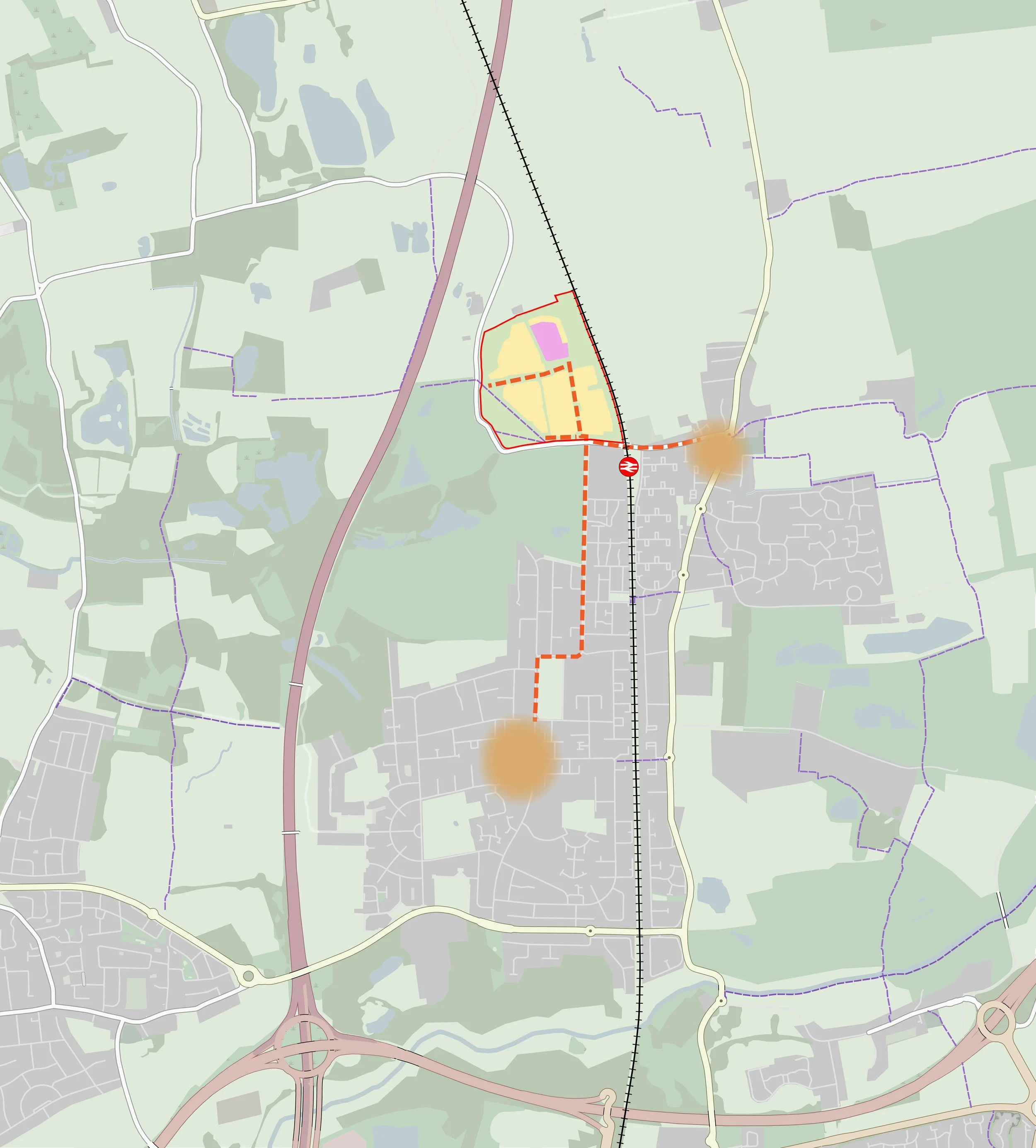
To create a place that is physically and socially connected to South Ockendon and its facilities and services, supporting walkability and community interaction.

To prioritise high-quality design, sustainability, and biodiversity, with green infrastructure spreading throughout the development.

To invest in new infrastructure, including education and active travel, so that the development adds value to the wider area from the outset.


Housing Mix and Affordability
Around 800 new homes will be provided in a carefully considered mix of sizes and tenures. The homes will range from one-bedroom apartments to five-bedroom family houses, allowing for a broad and inclusive community. The layout is designed to promote legibility and variety, with distinct character areas informed by building height, street design, and landscaping.
Fifty per cent of the homes delivered will be affordable. This will include a blend of social rent, affordable rent, and shared ownership. Affordable homes will be fully integrated throughout the development and built to the same quality and architectural standards as open-market homes. Hill is proposing a tenure-blind development that meets local housing needs and provides opportunities for residents across life stages and income levels.

Access, Movement and Transport
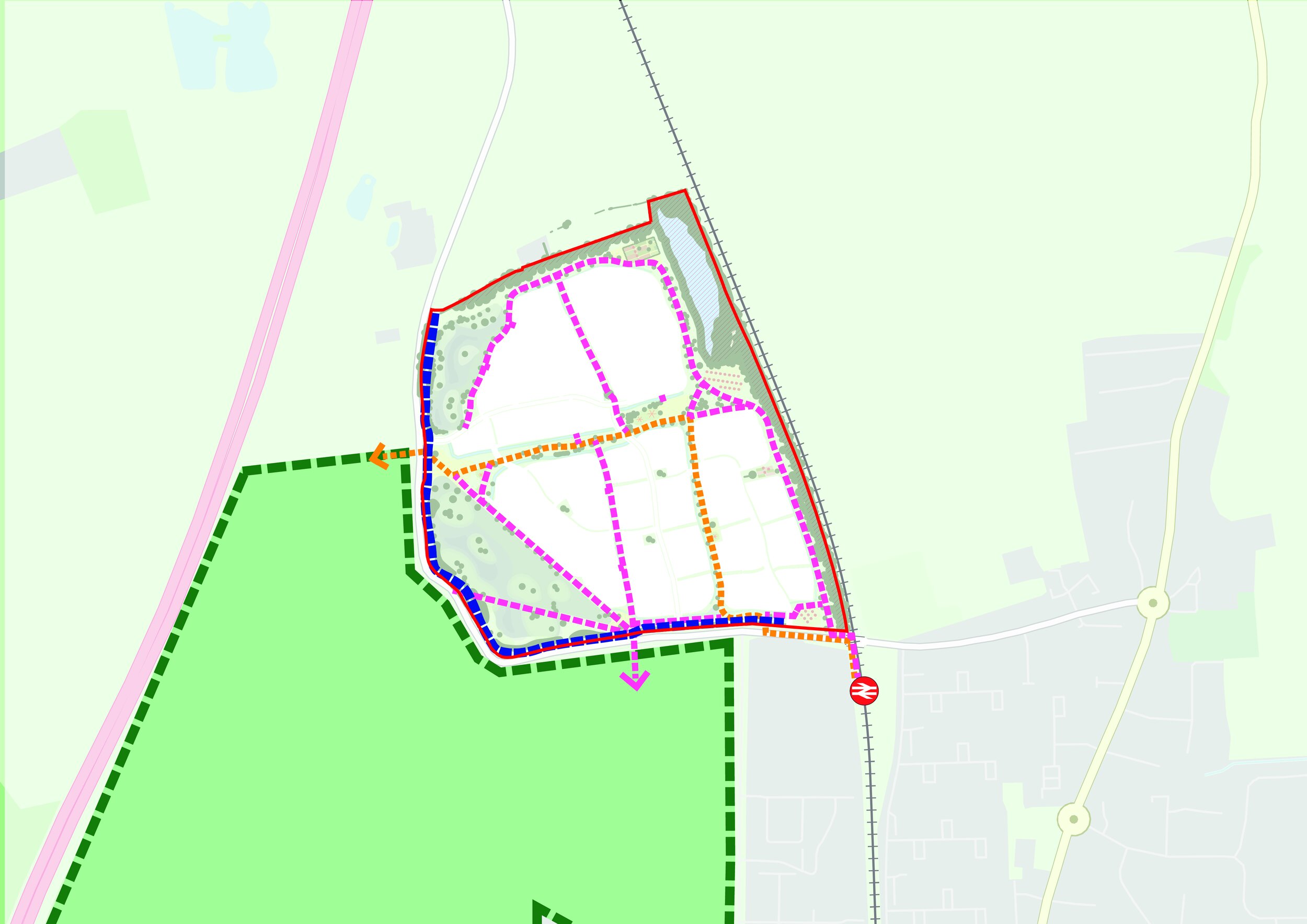
The proposed layout supports a highly walkable and connected neighbourhood. Three new vehicular access points will be created: two from West Road and one from Dennis Road. Internally, the street network will prioritise walking and cycling, with a permeable grid of routes designed to encourage active travel and reduce car dependency.
All homes will be within easy reach of Ockendon Station, which is located just 150 metres from the southern site boundary. The development supports the concept of a ‘20-minute neighbourhood,’ where most daily needs can be met within a short walk or cycle ride.
Hill is exploring opportunities to support Thurrock Council’s aspiration for a new mobility hub at the station.
Secure and covered cycle storage
This could include:

Real-time travel information and wayfinding

Cycle hire or e-bike docking stations

Public electric vehicle charging points

Car club parking bays

Parking across the site will be provided in accordance with local standards, with a combination of on-plot driveways, street parking bays, and small shared courtyards. Every home will have access to electric vehicle charging infrastructure, and the layout has been designed to future-proof for changing patterns in car ownership and mobility.
Green Infrastructure and Biodiversity
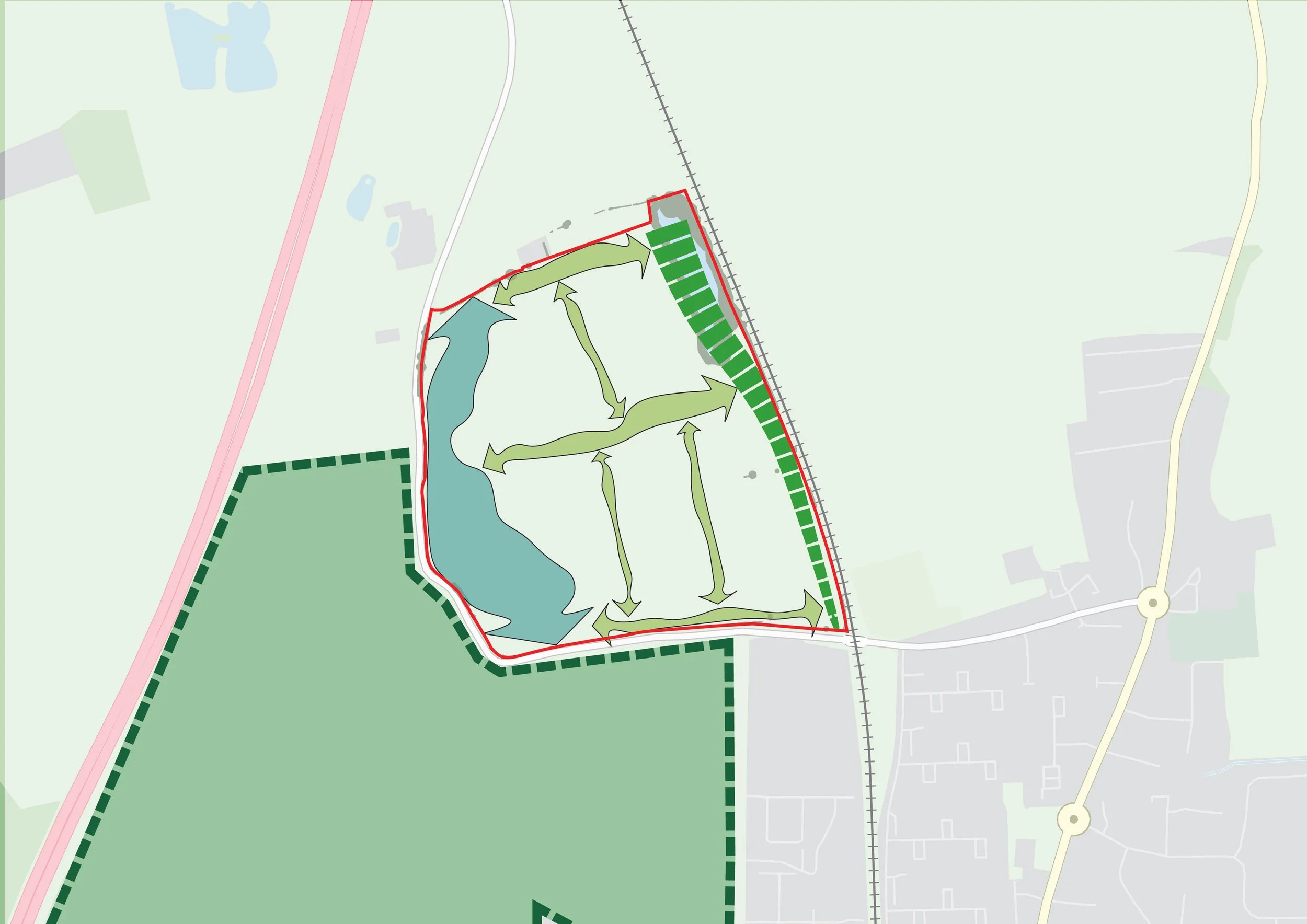
A significant proportion of the site will be dedicated to green and blue infrastructure. This includes a new village green, linear parks, children’s play areas, natural play features, and informal open spaces. The development will include new trees and vegetation, and existing hedgerows and mature trees will be retained where possible, helping to define routes and spaces while maintaining ecological corridors.
The site’s central pond will be enhanced as a biodiversity and landscape asset, contributing to both drainage and habitat objectives. A series of Sustainable Drainage Systems (SuDS), such as swales, rain gardens and attenuation basins, will manage surface water on-site while also forming part of the landscape design.
To meet the requirements of national planning policy and environmental legislation, the development will achieve a minimum of 10 per cent Biodiversity Net Gain. This will be delivered through on-site habitat creation, planting of native species, management of green spaces, and integration of wildlife-friendly design features such as bird boxes, log piles, and pollinator planting.
Design and Character
The overall design approach is landscape-led, using the site’s existing natural features to structure a series of neighbourhoods with their own identity and sense of place. Building heights will generally range from two to three storeys, with occasional four-storey buildings near the station and other key locations where greater density is considered appropriate. A clear hierarchy of streets, spaces, and focal points has been defined, ensuring that residents and visitors can easily navigate the site.
Architectural design will reflect the character of South Ockendon and the wider Essex vernacular, incorporating elements such as varied brickwork, pitched roofs, dormer windows, and recessed front doors. Design codes will be prepared to guide future reserved matters applications and secure consistent quality across all phases.
Care has been taken to ensure that homes are outward-facing, with front doors, windows and entrances overlooking streets and public spaces to support safety and interaction. The layout has also been shaped to maximise sunlight, views, and privacy.
All new homes will be constructed to modern sustainability standards, with a focus on energy efficiency, water conservation, and thermal comfort. Homes will also be designed to support healthy living, with access to daylight, ventilation, private outdoor space and easy access to green spaces.

Education Provision
To support the new community and reduce pressure on existing schools, the development will reserve a central 2.05-hectare parcel of land for a two-form entry primary school, with provision for early years facilities. The location has been chosen for its accessibility and visibility, allowing children from across the neighbourhood to walk or cycle safely to school.
Discussions are ongoing with the local education authority and council to agree the delivery mechanism and timing. The school is intended to come forward in the early stages of the development, ensuring that infrastructure is provided in parallel with new housing.